The Psychology of Fear in Choo Choo Charles: How to Stay Calm and Think Strategically Under Pressure

Choo Choo Charles is more than a horror game about a demonic train—it’s a psychological gauntlet that forces players to confront fear, uncertainty, and control. The dread of hearing that distant whistle or the sudden clang of metal on rails isn’t just atmospheric; it’s psychological conditioning. Every chase tests not just your mechanical skills but your mental state.
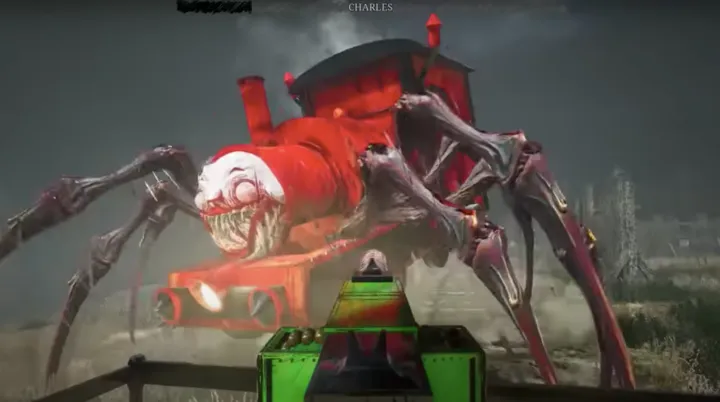
This guide explores how the game’s design manipulates fear and how players can transform anxiety into strategic awareness. By dissecting the psychology of panic, decision paralysis, and survival focus, we’ll uncover how to stay calm under pressure and turn terror into tactical advantage.
Understanding Fear: How Choo Choo Charles Triggers Panic
Fear in Choo Choo Charles operates on two levels—external and internal. The external is sensory: the sudden roar of Charles’ engine, the trembling screen, or the heavy metallic footsteps. The internal is psychological: anticipation, helplessness, and the illusion of vulnerability.
The game thrives on uncertainty. The random patrols of Charles mean the player never truly feels safe. This unpredictability induces anticipatory anxiety, a form of stress where fear builds up even before danger appears. This design choice makes players constantly alert, creating a sustained state of tension that the game weaponizes effectively.
The Science of Adrenaline and Tunnel Vision
During a chase, most players experience a surge of adrenaline. This biological reaction narrows attention—a phenomenon known as tunnel vision. While it enhances reaction time, it reduces overall awareness.
In Choo Choo Charles, this often causes players to over-focus on shooting while ignoring repair options or escape routes. The key to mastering pressure situations is managing that adrenaline, not resisting it.
Breathing control techniques—like consciously exhaling while shooting or maintaining rhythmic focus on train controls—can help balance heart rate. Staying calm extends your reaction time and prevents rash decisions.
Fear Conditioning: Why the Whistle Becomes a Weapon
The developers cleverly use fear conditioning, a psychological principle where neutral sounds become associated with terror. The whistle of Charles, initially harmless, becomes a trigger for panic after repeated encounters.

This auditory manipulation controls the player’s emotions before the danger even arrives. Experienced players learn to reinterpret that whistle not as fear, but as a signal to prepare—checking scrap levels, weapon readiness, and escape routes. Turning a trigger into a cue for strategy is a powerful mental shift.
The Power of Anticipation and the Paradox of Control
Choo Choo Charles exploits a player’s desire for control. You drive a train, yet you are hunted by one—a metaphorical conflict that defines the entire experience. The sense of control you gain through upgrades, repairs, and weapons is always overshadowed by the looming unpredictability of Charles.
This tension between perceived control and real danger fuels cognitive dissonance, forcing players to make decisions under conflicting impulses—fight or flee, attack or repair. Mastering fear here means accepting partial control. When you understand that you can’t control Charles, only your reactions to him, every encounter becomes more manageable.
Training the Mind: Turning Fear into Focus
Players who succeed in Choo Choo Charles treat fear not as an emotion but as data. Every sound, shadow, or silence tells a story.
Fear can sharpen awareness if interpreted correctly. The key lies in retraining the brain to associate fear cues with analysis rather than panic. For instance, instead of recoiling when Charles appears, note his entry direction, attack pattern, and speed—information that’s vital for predicting future encounters.
Mental reframing like this—transforming fear into focus—turns each battle into a controlled experiment rather than a frantic escape.
The Role of Environmental Anxiety: Isolation and the Sound of Silence
The world of Choo Choo Charles is intentionally barren. The fog, the dim lighting, and the long stretches of silence all amplify isolation. This design manipulates environmental anxiety, where emptiness becomes threatening.
The absence of constant stimuli forces the mind to fill in the blanks with imagined threats. Players might hear phantom sounds or suspect ambushes that aren’t real. This over-activation of the imagination heightens stress but also offers insight: awareness can become paranoia if unchecked.

Strategic players balance this tension by using environmental cues instead of fearing them. The absence of sound can indicate safety, while specific ambient noises signal an approaching encounter.
Emotional Fatigue and Decision Paralysis
As the game progresses, the constant tension wears players down. This is called emotional fatigue, a psychological drain that reduces decision-making accuracy. In survival horror games, fatigue often leads to poor timing, panic repairs, or wasting resources.
The best way to counter emotional fatigue in Choo Choo Charles is through pacing. Instead of sprinting from mission to mission, take short pauses between encounters. These moments of mental reset reduce cognitive overload, allowing for clearer thinking when danger returns.
Moreover, simplifying choices helps. Decide beforehand which upgrades or weapons you’ll use in combat to minimize hesitation. Fear thrives in uncertainty—preparation kills uncertainty.
Building Resilience: The Psychology of Repeated Failure
Dying in Choo Choo Charles can feel personal, but it’s essential to understand failure as feedback. Each defeat is a data point, not a verdict. Resilient players treat every encounter as a lesson in pattern recognition.
Resilience builds through repetition and reframing. Instead of thinking “I failed,” think “I discovered one more timing to avoid.” This cognitive approach mirrors real-world psychological resilience—shifting from a threat mindset to a growth mindset.
Over time, this process desensitizes panic triggers. Charles stops being an unknowable monster and becomes a predictable system—a dangerous one, but not uncontrollable.
The Flow State: Merging Calm and Chaos
When players reach mastery, they enter what psychologists call the flow state. In this state, the player is entirely immersed, fear transforms into clarity, and reactions become instinctive.
Reaching flow in Choo Choo Charles requires three elements:
- Familiarity with controls and weapons.
- Predictive understanding of Charles’ behavior.
- Emotional neutrality—neither panic nor apathy.
The flow state transforms survival from reactive to proactive. Instead of running from Charles, you begin leading him—dictating the terms of engagement. This mental state represents the ultimate victory: control over fear itself.
Strategic Calm: Maintaining Composure in High-Stress Moments

Remaining calm in a horror game is not a passive skill—it’s a practiced technique. Composure under pressure means recognizing emotional spikes and consciously grounding yourself.
Simple behavioral anchors, like controlling breathing or focusing on task sequences, maintain clarity. For example, when Charles attacks:
- Focus first on maintaining train speed.
- Next, swap to primary weapon.
- Then, manage repairs only when distance allows.
- By sticking to this mental checklist, players replace panic with process.
Emotional regulation translates into better mechanical play. The game’s horror loses its grip once your mind learns to process fear through logic instead of instinct.
Conclusion
Choo Choo Charles isn’t just a monster that hunts you—it’s a psychological mirror. The real challenge lies in confronting your reactions under stress. Every sound, chase, and narrow escape teaches emotional control as much as gameplay mastery.
By understanding the psychology of fear—its roots in uncertainty, anticipation, and control—you can reshape it into an ally. Staying calm and thinking strategically under pressure doesn’t make you immune to fear; it makes you fluent in it. In that fluency, survival becomes not just possible, but empowering.